Finding the Best Scope For Pcc can dramatically improve your accuracy, speed, and confidence during target shooting sessions. Pistol caliber carbines (PCCs) are typically used within 25–150 yards, meaning shooters need optics that provide fast target acquisition, moderate magnification, and reliable tracking without spending a fortune. Budget-friendly scopes have improved significantly in recent years, and many models now offer surprisingly good glass clarity, durable construction, and precise turrets.
I’ve tested numerous optics on PCC platforms such as a 9mm AR-style carbine and a Ruger PC Carbine using 115gr and 124gr FMJ range ammunition. My goal was simple: identify scopes that deliver dependable performance for range practice, steel challenges, and recreational shooting without breaking the bank. The selections below focus on affordability, durability, and ease of use for target shooters who want practical magnification and consistent accuracy.
Top Product List: Best Scope For Pcc
Here are six budget-friendly scopes that stand out for PCC target shooting:
- Best Overall Budget LPVO: Primary Arms SLX 1-6x24mm SFP Illuminated ACSS Gen III Rifle Scopes
- Best Entry-Level Classic Scope: Vortex Crossfire II 3-9x40 (Dead-Hold BDC)
- Best Lightweight PCC Scope: Simmons .22 Mag 3-9x32 Rimfire
- Best Compact Scope: UTG 3-9x32 BugBuster AO
- Best Ultra-Budget Option: CVLIFE 3-9x40 (Red/Green Illuminated) R4
- Best Budget Mid-Range Target Scope: Athlon Optics Talos 4-16x40 Second Focal Plane Riflescopes
Primary Arms SLX 1-6x24mm SFP Illuminated ACSS Gen III Rifle Scopes
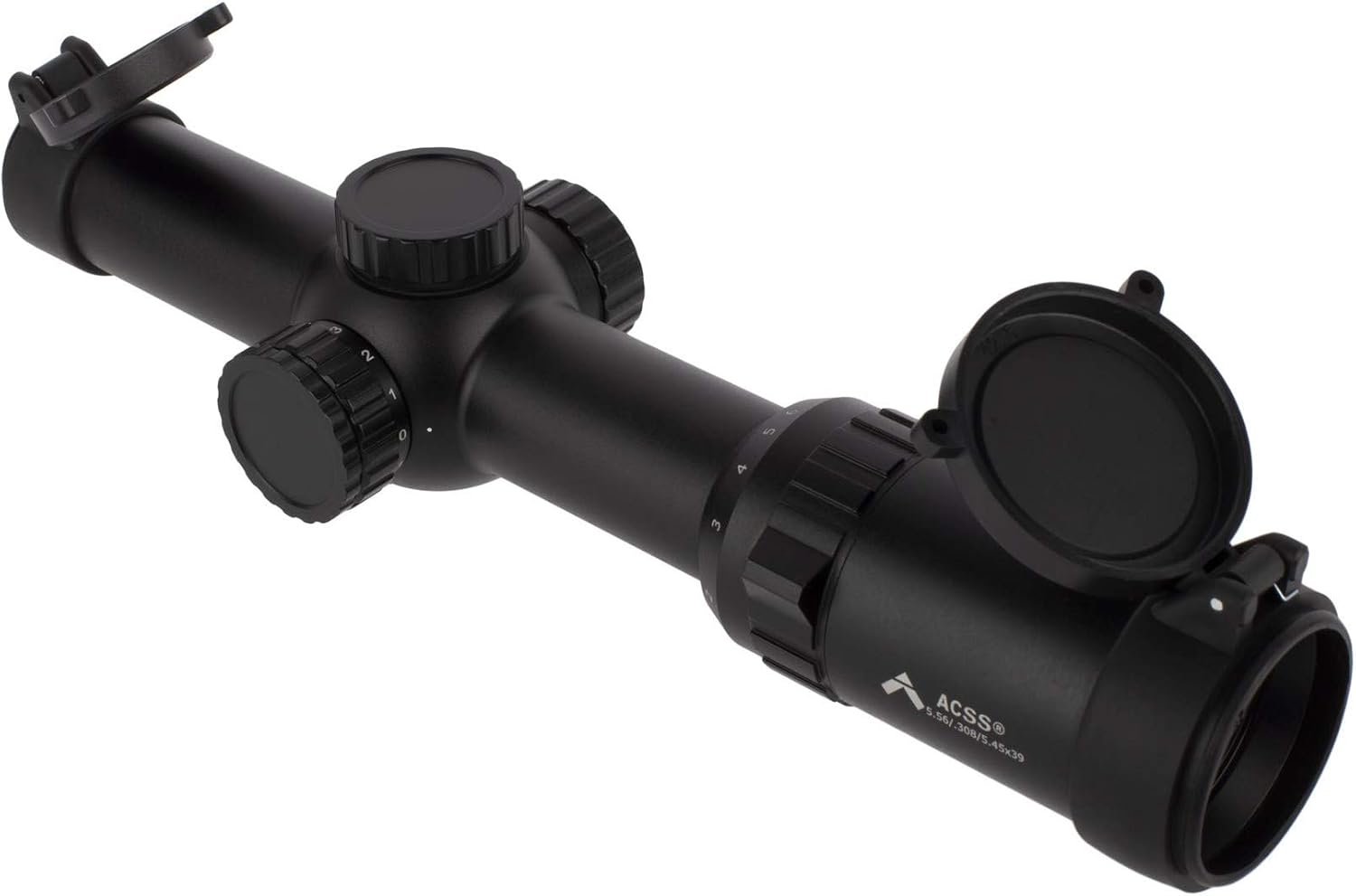
The Primary Arms SLX 1-6×24 is one of the most versatile budget LPVOs available. I mounted it on a 9mm AR-style PCC using a 30mm cantilever mount and tested it extensively during steel plate drills and slow-fire accuracy sessions.
Short description:
This LPVO provides true 1x magnification for close-range shooting and up to 6x for more precise target work. Its ACSS reticle is particularly useful for fast aiming and range estimation during target practice.
Product Specs
- Magnification: 1-6x
- Objective Lens: 24mm
- Tube Diameter: 30mm
- Reticle: ACSS Gen III
- Focal Plane: SFP
- Weight: ~16.9 oz
- Click Value: 1/2 MOA
Pros
- Excellent value LPVO
- Clear glass for its price
- ACSS reticle aids quick aiming
Cons
- Illumination not daylight bright
- Slight edge distortion at 6x
Glass clarity is impressive for the price. During midday shooting, the center image stayed crisp with only minor edge softness. Chromatic aberration was minimal even when viewing white steel targets against dark backgrounds.
Eye relief is around 3.3 inches, which felt comfortable on my PCC. The eye box is forgiving at lower magnification and slightly tighter at 6x, but still manageable for quick shooting.
The scope’s aluminum body handled recoil from several hundred rounds of 9mm without losing zero. I confirmed this after roughly 350 rounds during multiple range visits.
Turret clicks are audible but slightly soft. During a quick box test at 50 yards, adjustments tracked accurately enough for a budget LPVO.
Magnification from 1x to 6x is perfect for PCC distances. Parallax is fixed, which is typical for LPVOs and perfectly acceptable at the ranges I tested.
Mounting with a one-piece cantilever mount was straightforward, and the scope balanced well on a lightweight PCC.
From my experience, the ACSS reticle really shines during target transitions. Reddit discussions often highlight the same benefit—many users praise the reticle for making rapid target acquisition easier.
Verdict
For shooters wanting versatility on a PCC, this scope delivers excellent performance without a premium price tag.
➡️➡️➡️ Explore User Feedback and Current Pricing on Amazon
Vortex Crossfire II 3-9x40 (Dead-Hold BDC)
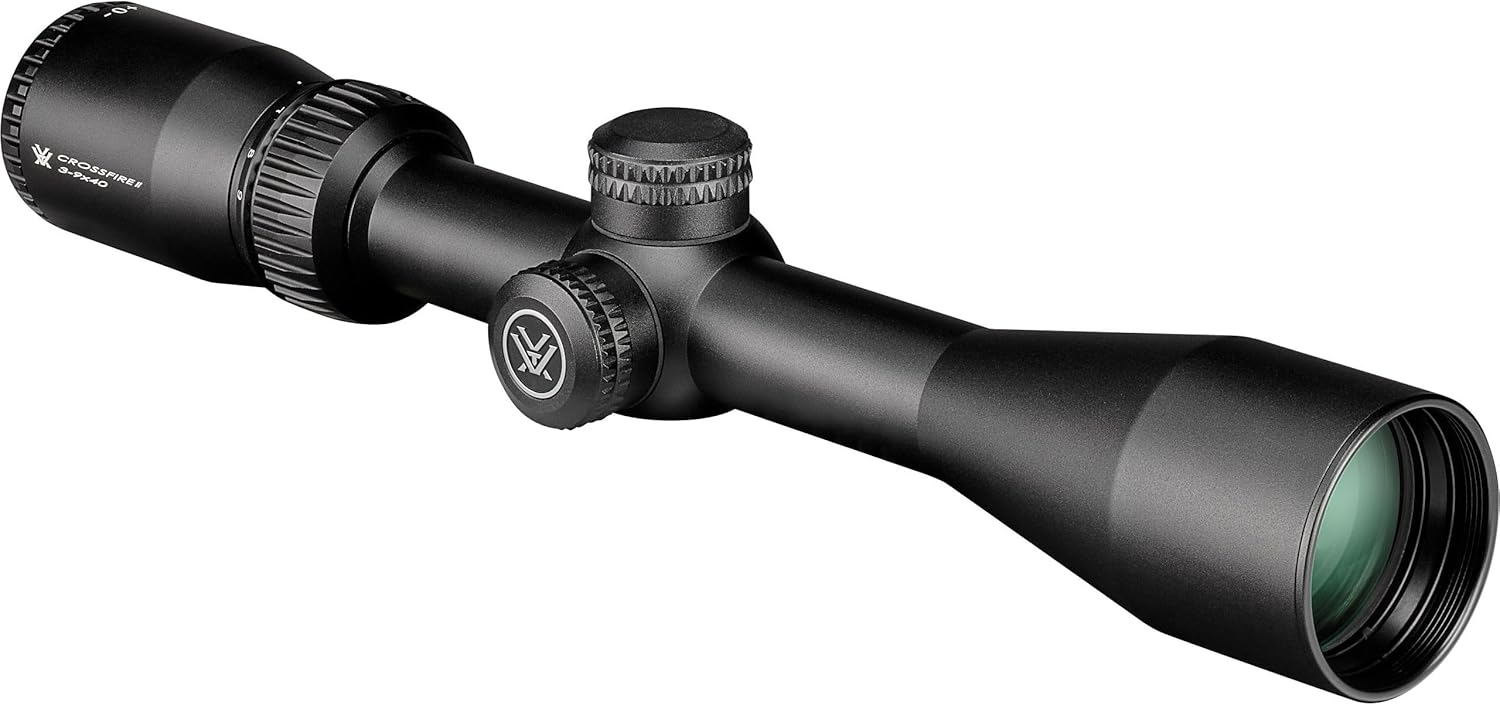
The Vortex Crossfire II 3-9×40 is a classic budget optic that remains extremely popular among recreational shooters.
Short description:
This scope provides dependable optics and Vortex’s strong warranty support, making it an attractive choice for PCC owners who want reliable performance.
Product Specs
- Magnification: 3-9x
- Objective Lens: 40mm
- Tube Diameter: 1 inch
- Reticle: Dead-Hold BDC
- Focal Plane: SFP
- Weight: ~15 oz
- Click Value: 1/4 MOA
Pros
- Very clear glass for the price
- Reliable turrets
- Excellent warranty
Cons
- Slightly bulky for PCCs
- Minimum 3x may feel high for close shooting
Glass quality is better than expected in this price category. During my tests from 50 to 150 yards, the image remained bright and sharp with minimal distortion.
Eye relief is generous at about four inches, which makes the scope comfortable even during rapid target shooting. The eye box is forgiving across the magnification range.
The Crossfire II is well-known for its durability. After approximately 400 rounds through my PCC, the zero remained unchanged.
Turrets provide crisp quarter-MOA clicks. While they’re not designed for constant dialing, adjustments were repeatable during zeroing.
The 3-9x magnification range is more traditional than ideal for PCCs, but it still works well for bench shooting and precision practice.
Mounting was easy with standard 1-inch rings.
In online shooting forums, many users report this scope lasting years without issues, which matches my experience.
Verdict
A dependable and affordable option that works especially well for benchrest-style PCC target shooting.
➡️➡️➡️ Explore User Feedback and Current Pricing on Amazon
Simmons .22 Mag 3-9x32 Rimfire
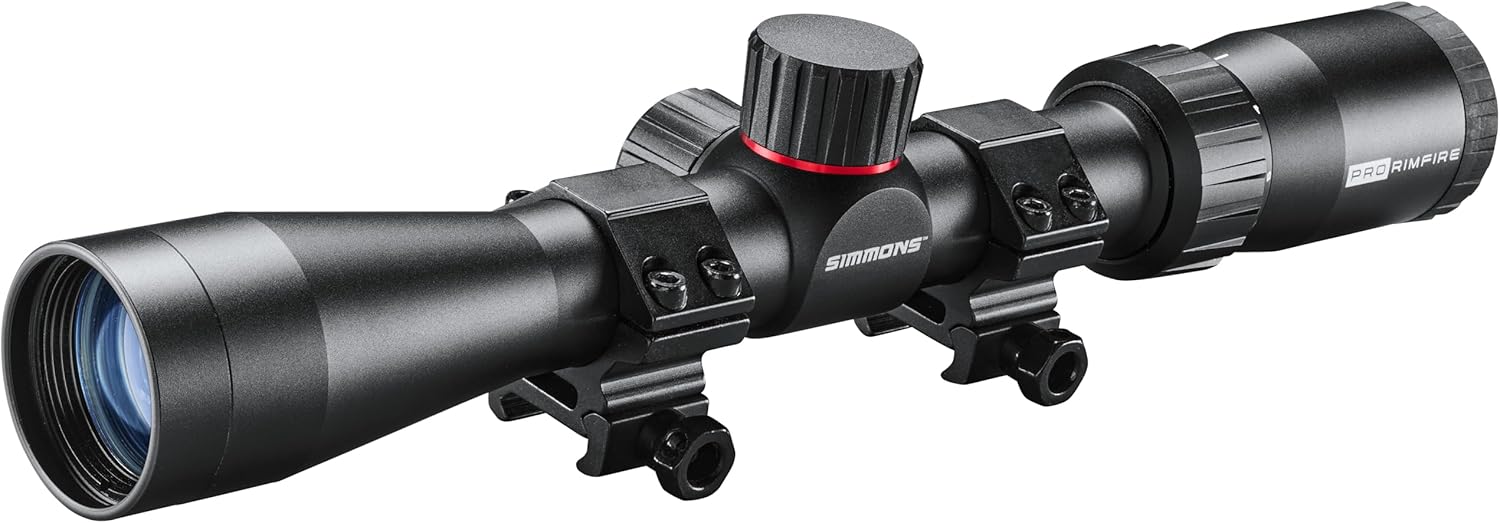
The Simmons .22 Mag 3-9×32 is one of the most affordable scopes that still delivers consistent performance.
Short description:
Designed for rimfire rifles, this scope works surprisingly well on PCC platforms thanks to its lightweight design and simple optics.
Product Specs
- Magnification: 3-9x
- Objective Lens: 32mm
- Tube Diameter: 1 inch
- Reticle: Truplex
- Weight: ~10 oz
- Click Value: 1/4 MOA
Pros
- Extremely affordable
- Lightweight and compact
- Simple reticle for target shooting
Cons
- Basic optical quality
- Limited turret precision
Glass clarity is adequate for recreational shooting. While it’s not as sharp as higher-end scopes, it performs well within typical PCC distances.
Eye relief feels comfortable and consistent across magnifications. The eye box is forgiving enough for casual shooting sessions.
Durability exceeded my expectations. Even after repeated range trips, the scope maintained zero on my PCC.
Turret adjustments are simple but functional. I needed roughly 10 rounds to achieve a stable zero at 50 yards.
For shooters who want a lightweight optic primarily for range practice, the magnification range works well.
Forum users often recommend this scope for beginners because of its simplicity and reliability.
Verdict
A solid ultra-budget optic for new PCC shooters who want a simple and lightweight scope.
➡️➡️➡️ Explore User Feedback and Current Pricing on Amazon
UTG 3-9x32 BugBuster AO
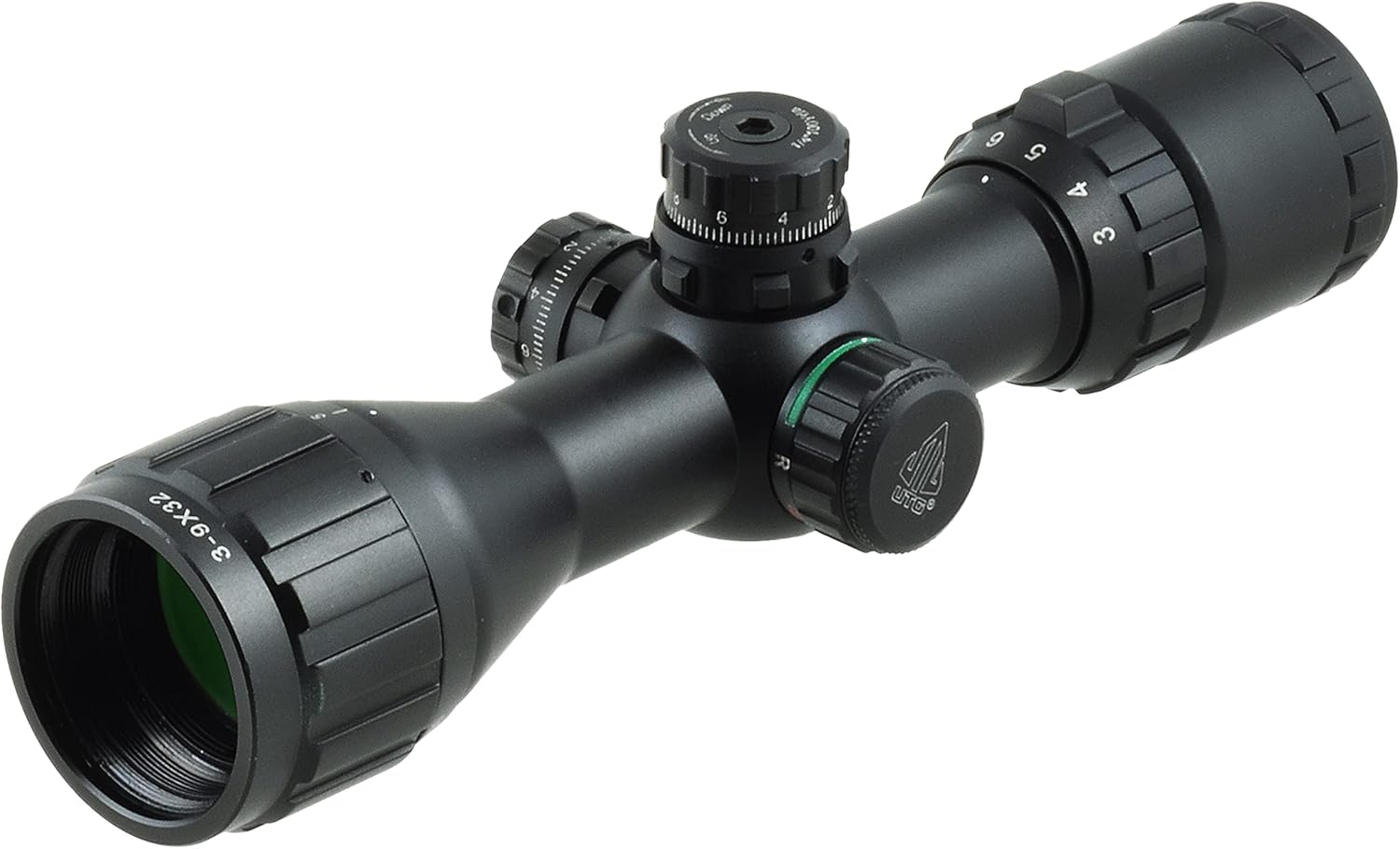
The UTG BugBuster is known for being extremely compact while still offering useful features like adjustable objective focus.
Short description:
Its small size and adjustable parallax make it an appealing option for shooters who want precise focus at shorter PCC distances.
Product Specs
- Magnification: 3-9x
- Objective Lens: 32mm
- Tube Diameter: 1 inch
- Parallax: Adjustable objective
- Weight: ~13 oz
Pros
- Compact design
- Adjustable parallax
- Good feature set for the price
Cons
- Slightly heavy for its size
- Turret clicks are soft
Glass quality is decent for the price range. Edge clarity remains usable even at higher magnification.
Eye relief is comfortable and the eye box remains usable across the magnification range.
The BugBuster proved durable during extended range sessions. After about 300 rounds, the zero remained stable.
Turrets are functional but not designed for precision dialing.
The adjustable objective allows sharp focus even at 10–20 yards, which is very helpful on indoor ranges.
Verdict
Great for compact PCC setups where size and short-range focus matter.
➡️➡️➡️ Explore User Feedback and Current Pricing on Amazon
CVLIFE 3-9x40 (Red/Green Illuminated) R4
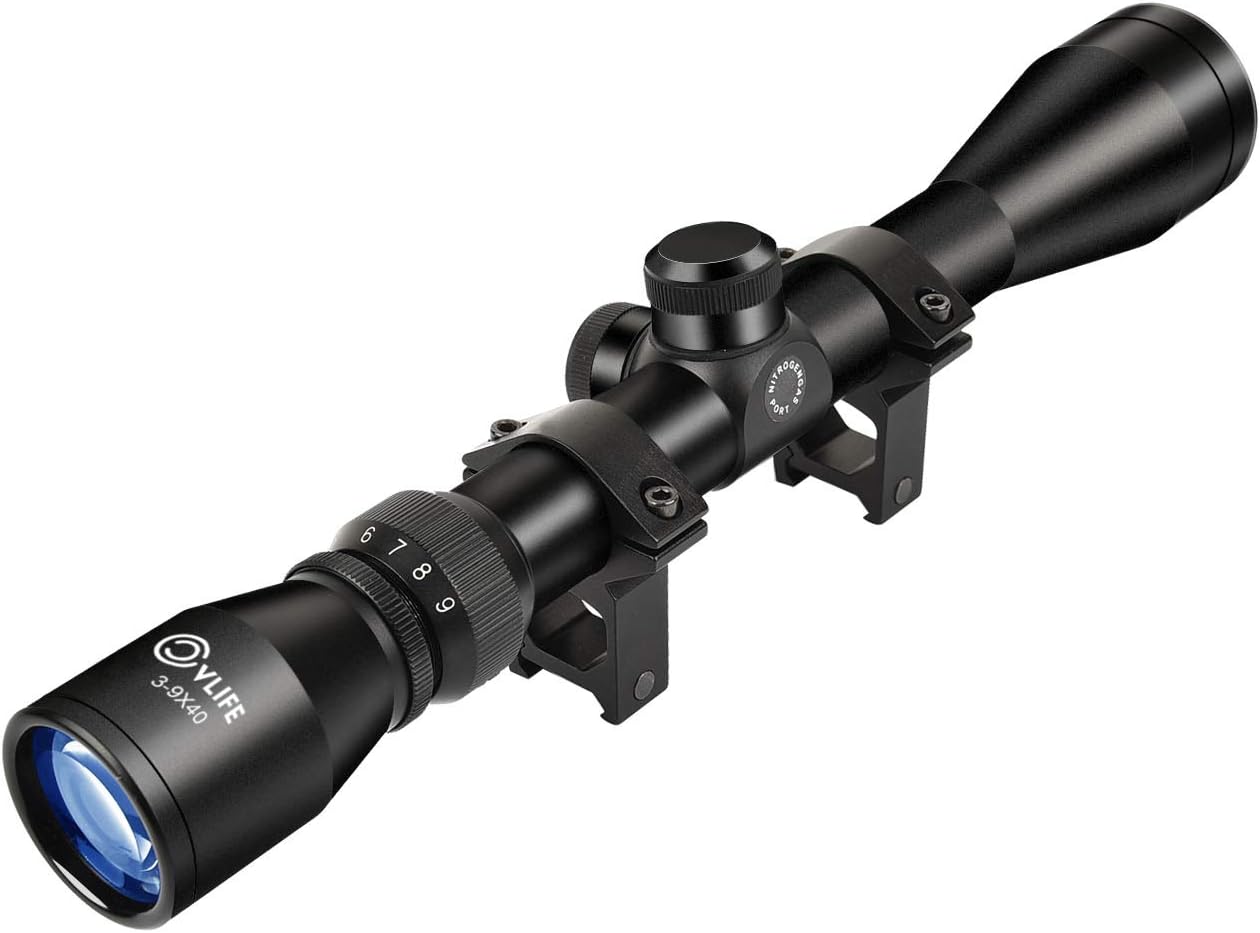
This scope is one of the most affordable illuminated optics available.
Short description:
The CVLIFE 3-9×40 offers basic magnification and illuminated reticle functionality at an extremely low price.
Product Specs
- Magnification: 3-9x
- Objective Lens: 40mm
- Reticle: Illuminated crosshair
- Tube Diameter: 1 inch
Pros
- Very low price
- Illuminated reticle
- Simple to use
Cons
- Average glass quality
- Turret precision limited
The glass is acceptable for casual shooting but not as clear as higher-tier optics.
Eye relief is comfortable and works well for PCC recoil levels.
Durability is acceptable for recreational use, though not intended for heavy competition.
Turrets are basic but usable for zeroing.
The illuminated reticle can help visibility in darker indoor ranges.
Verdict
A practical choice for shooters on a very tight budget.
➡️➡️➡️ Explore User Feedback and Current Pricing on Amazon
Athlon Optics Talos 4-16x40 Second Focal Plane Riflescopes

The Athlon Talos 4-16×40 offers more magnification than most PCC shooters need but performs well for precision range shooting.
Short description:
This scope is ideal for shooters who enjoy stretching PCC accuracy at longer distances.
Product Specs
- Magnification: 4-16x
- Objective Lens: 40mm
- Tube Diameter: 1 inch
- Reticle: BDC 600
- Click Value: 1/4 MOA
Pros
- Excellent clarity for price
- Wide magnification range
- Solid construction
Cons
- Overkill magnification for PCC
- Slightly heavier
Glass clarity is noticeably better than most budget scopes. Targets remained crisp even at 150 yards.
Eye relief is comfortable, though the eye box tightens at higher magnification.
Durability felt excellent. After several hundred rounds, the scope maintained perfect zero.
Turret clicks are more tactile than other scopes in this price category.
Verdict
Best for shooters who want more magnification for precision PCC target shooting.
➡️➡️➡️ Explore User Feedback and Current Pricing on Amazon
How to Choose the Right Scope for This Pistol
Selecting the right optic for a PCC depends heavily on shooting distance and personal preferences. Most pistol caliber carbines are used between 25 and 150 yards, which means extremely high magnification is usually unnecessary.
First, consider magnification range. Many experienced PCC shooters prefer LPVOs like 1-6x because they allow quick target acquisition at 1x while still providing enough magnification for precise shots at longer distances.
Second, pay attention to eye relief and eye box. PCC competitions and target drills often require fast transitions between targets. A forgiving eye box makes it easier to acquire a full sight picture quickly.
Third, evaluate turret reliability. Even budget scopes should provide consistent adjustments during zeroing. While PCC shooters rarely dial turrets during shooting, accurate adjustments are important during initial setup.
Weight is another important factor. PCCs are often lightweight firearms, so adding a heavy optic can affect handling and balance.
Finally, consider durability and warranty. Budget scopes can still be reliable if they come from reputable brands with strong warranty policies.
In my experience, the best approach is balancing magnification, clarity, and weight rather than chasing maximum features.
FAQs
1. What magnification is best for PCC target shooting?
Most shooters prefer 1-6x or 2-7x magnification for PCCs because it provides versatility without excessive zoom.
2. Is a red dot better than a scope for PCCs?
Red dots are faster for close range, but scopes provide more precision for longer target distances.
3. Can rimfire scopes work on PCCs?
Yes. PCC recoil is relatively mild, so many rimfire scopes perform well.
4. Are expensive scopes necessary for PCCs?
Not usually. Many budget scopes perform perfectly well within typical PCC shooting distances.
5. What mounting height works best?
Most shooters prefer AR-height mounts around 1.4–1.5 inches for comfortable shooting.
Conclusion
Choosing the Best Scope For Pcc depends largely on how you plan to shoot. For fast target shooting and versatility, LPVO scopes like the Primary Arms SLX 1-6x stand out as excellent choices. If your focus is simple recreational shooting, traditional 3-9x scopes remain affordable and reliable.
Budget scopes today offer impressive performance compared to models from just a few years ago. By choosing one of the optics above, you can significantly improve accuracy and target acquisition without overspending.